Ora
Keep part-time hours clear
Short shifts and a second job are easier to review when each has its own dates, rates and pay period. Total actual paid hours per job first, then label any personal overview clearly.
A week with two jobs
A part-time week may contain a few short shifts rather than a repeated daily pattern. The fictional examples below assume no unpaid breaks, no premium and one currency. They do not describe an overtime entitlement.
On a narrow screen, scroll the table horizontally to see all columns.
| Job and days | Paid time | Rate | Gross estimate |
|---|---|---|---|
| Sample Café, Tuesday and Thursday | 2 × 4h = 8h | €15/h | €120 |
| Demo Shop, Saturday | 5h | €17/h | €85 |
| Personal overview | 13h | Separate rates | €205 |
A single blended rate would hide which employer should account for each amount. Keep the two calculations even when a combined gross total is useful for personal planning.
Respect separate pay periods
The café might pay for a week while the shop uses a calendar-month period. A personal week of €205 gross is not automatically one paycheck or money available on one date. Reconcile each employer’s payslip against its own dates.
A shift change can also move earnings across a cut-off. Keep the actual worked date and the version submitted, with a short note about any correction.
Check short-shift details
Short shifts still need complete starts, finishes and break treatment. Do not round each shift to a familiar number before adding it. An extra 15 minutes on four shifts adds one hour to the week.
Check that copied rows are not duplicates and that two jobs do not overlap accidentally. Travel or waiting time should remain separate unless the applicable work rules determine otherwise. Part-time status alone does not answer every pay question.
Keep the overview honest
Total paid time for each job, then apply its own rate assumptions. If currencies differ, keep the original-currency totals instead of adding the numbers as though they were the same money.
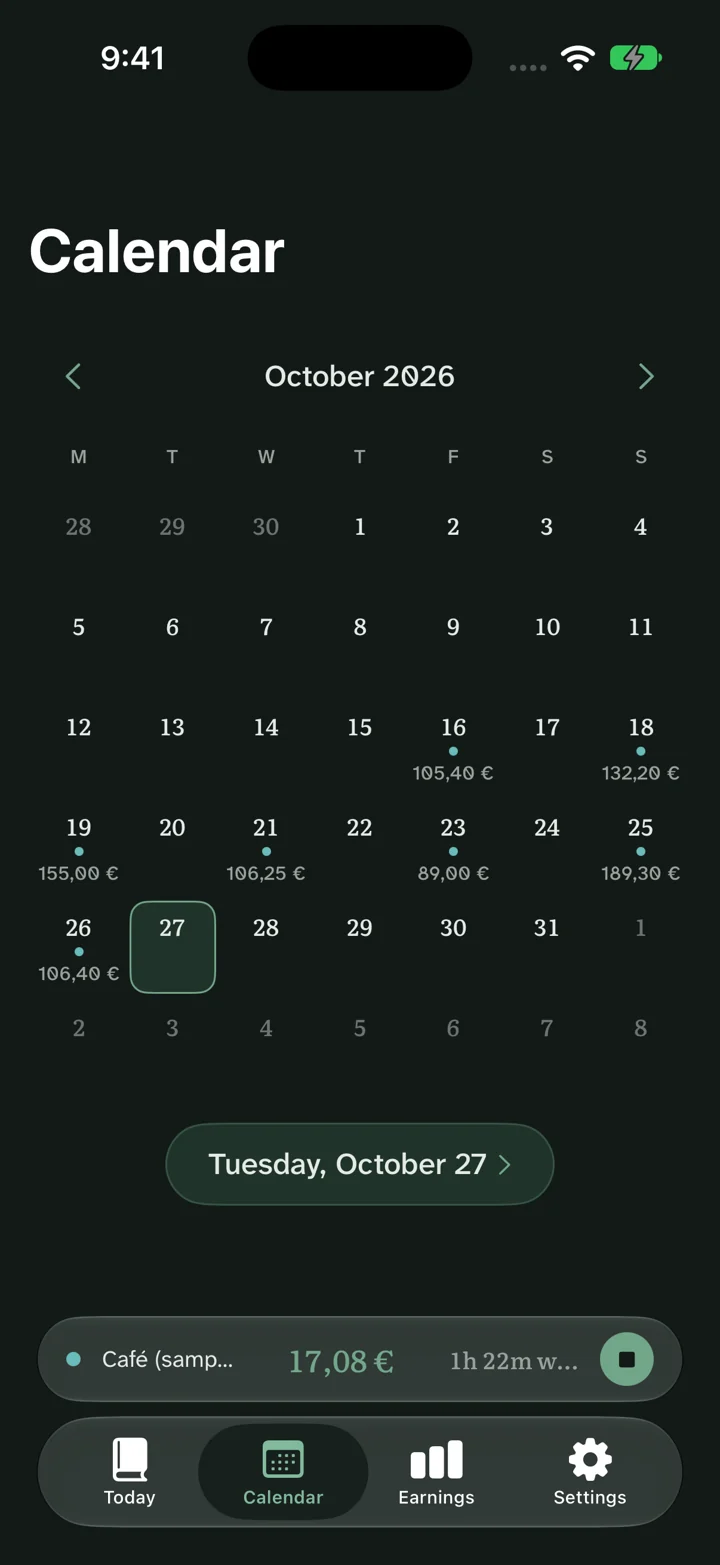
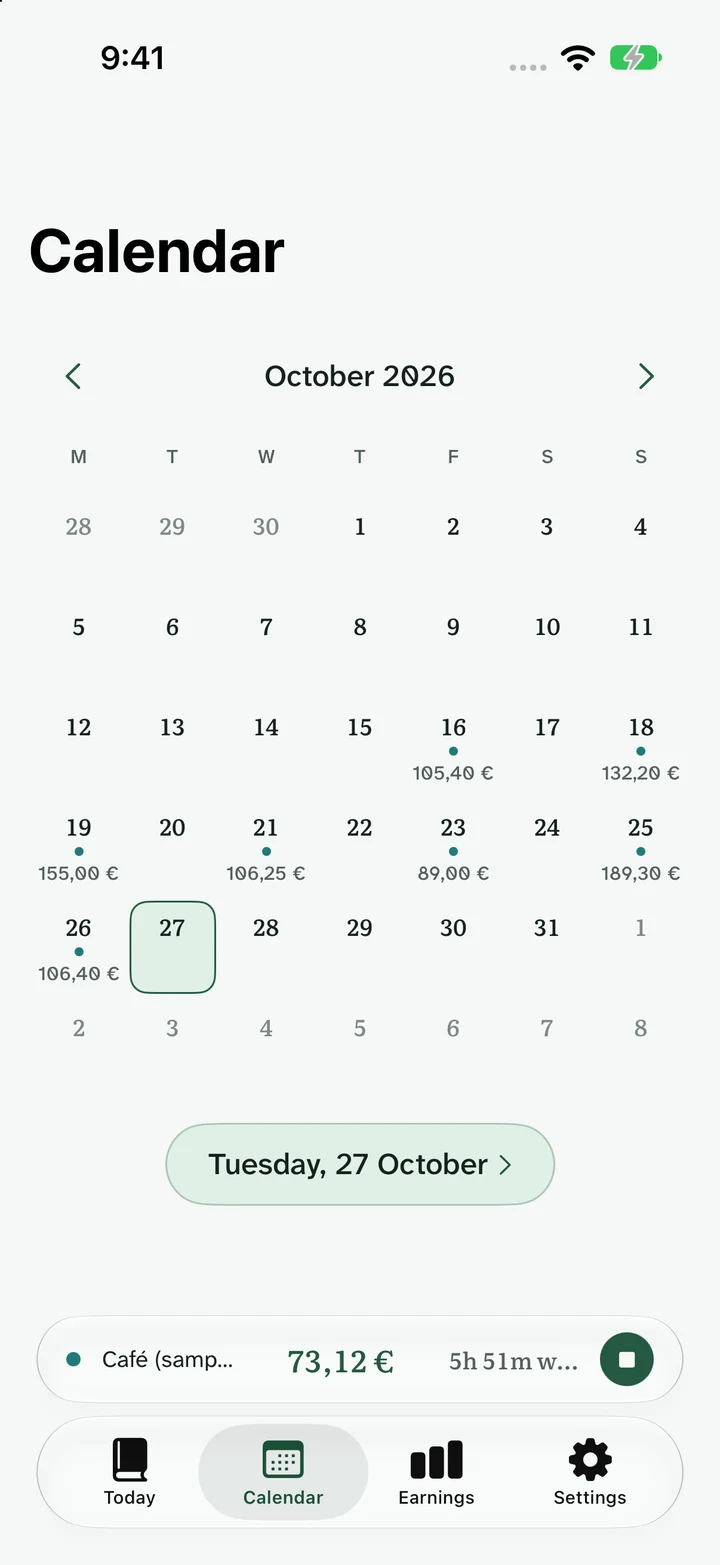
Ora demonstrates personal shift records and estimated earnings. The screenshot contains synthetic sample data, not either fictional employer’s actual record. A personal overview is not a combined payslip, tax calculation or verification of every payroll rule.
Share only the job and period needed for a specific question. Keep unrelated employers’ pay details out of a report sent to another workplace.
Common questions
Can I combine hours from different jobs for overtime?
Do not assume that. Applicable rules can depend on the employment relationship and jurisdiction. Keep the underlying records separate.
Does the personal total equal my next paycheck?
No. Employers can use different periods and payment dates, and the example is gross before deductions.
How can small schedule changes be checked?
Preserve exact actual times, compare each changed shift and keep a note of corrections. Four extra 15-minute periods add up to one hour.
Results are estimates before tax. Rules and actual pay vary with your contract, location, payroll and deductions. About these estimates.