Ora
Keep overnight records clear
An overnight record needs both dates and actual break times. Calculate real elapsed time first, then separate any eligible premium hours using the rule that applies to the work.
Use both dates
A shift beginning at 20:00 and ending at 08:00 the next day spans 12 ordinary elapsed hours. With a one-hour unpaid break, paid time is 11 hours. At a chosen €15 hourly base rate, the simple gross estimate is €165 before any premiums or adjustments.
The example is a time-record calculation, not a statement that a 12-hour pattern or unpaid break is suitable or lawful for every security role. Check the actual agreement, workplace requirements and local rules.
Calculate the dated interval before totaling several shifts.
Record handovers separately
A handover that changes the actual start or finish can affect the elapsed time. Keep the planned roster, actual times and a brief correction note. Avoid including access codes, site vulnerabilities, client identities or incident details in a personal hours record.
If a handover overlaps another recorded shift, inspect the entries before totaling them. A duplicate or wrong date should be corrected rather than counted automatically as additional worked time.
Split the night window
Assume a chosen 22:00–06:00 premium window and an unpaid break from 02:00 to 03:00. The 20:00–08:00 shift contains eight window hours before breaks, leaving seven paid night hours and four other paid hours.
With a hypothetical €3 additive night premium, that is €165 base plus €21 premium = €186 gross. The €3 amount and window are demonstration inputs. Confirm the actual rule and its interaction with overtime or other premiums.
Check seasonal clock changes
When a location moves clocks by one hour during the shift, 20:00–08:00 can enclose 11 or 13 real hours rather than 12. A repeated hour may occur twice inside the night window. The break’s elapsed length can also depend on its exact dated instants.
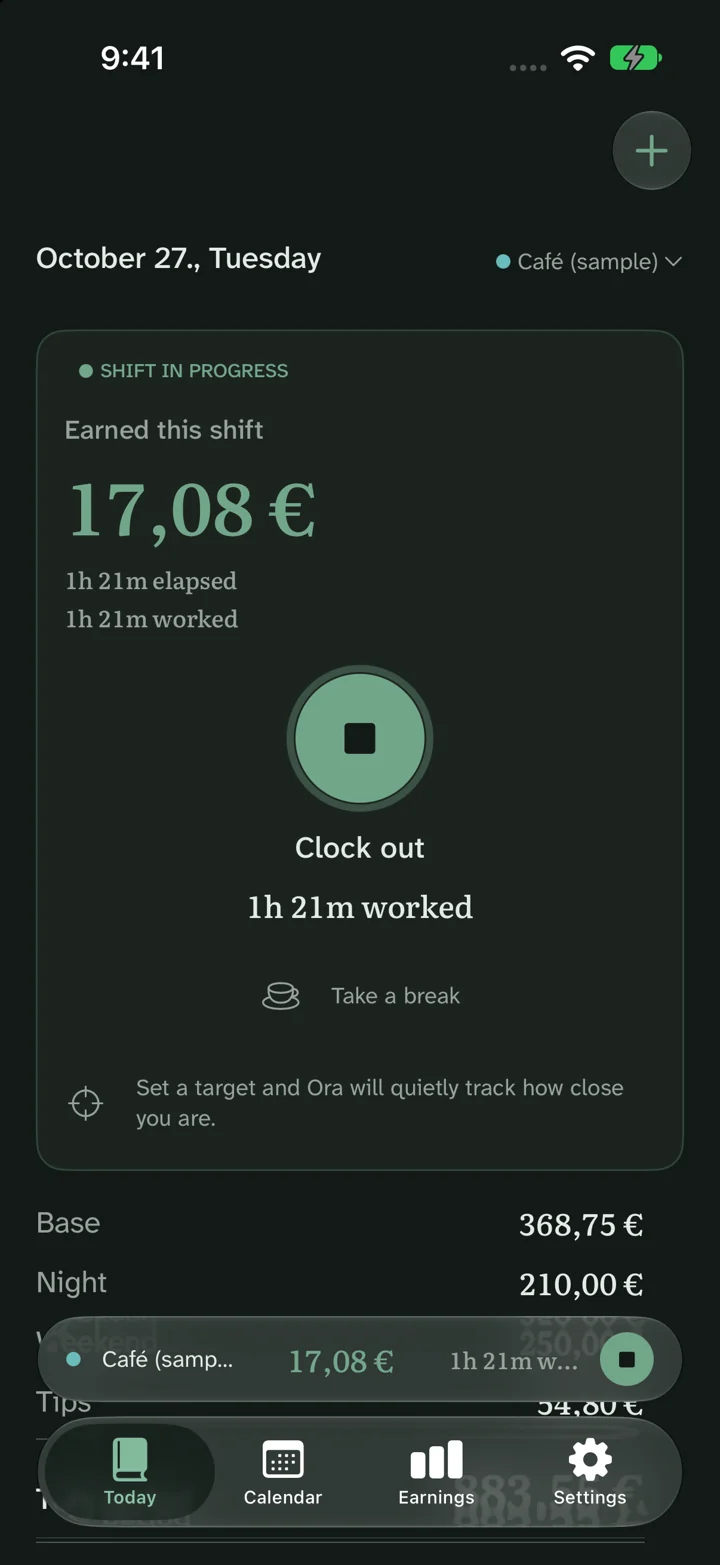
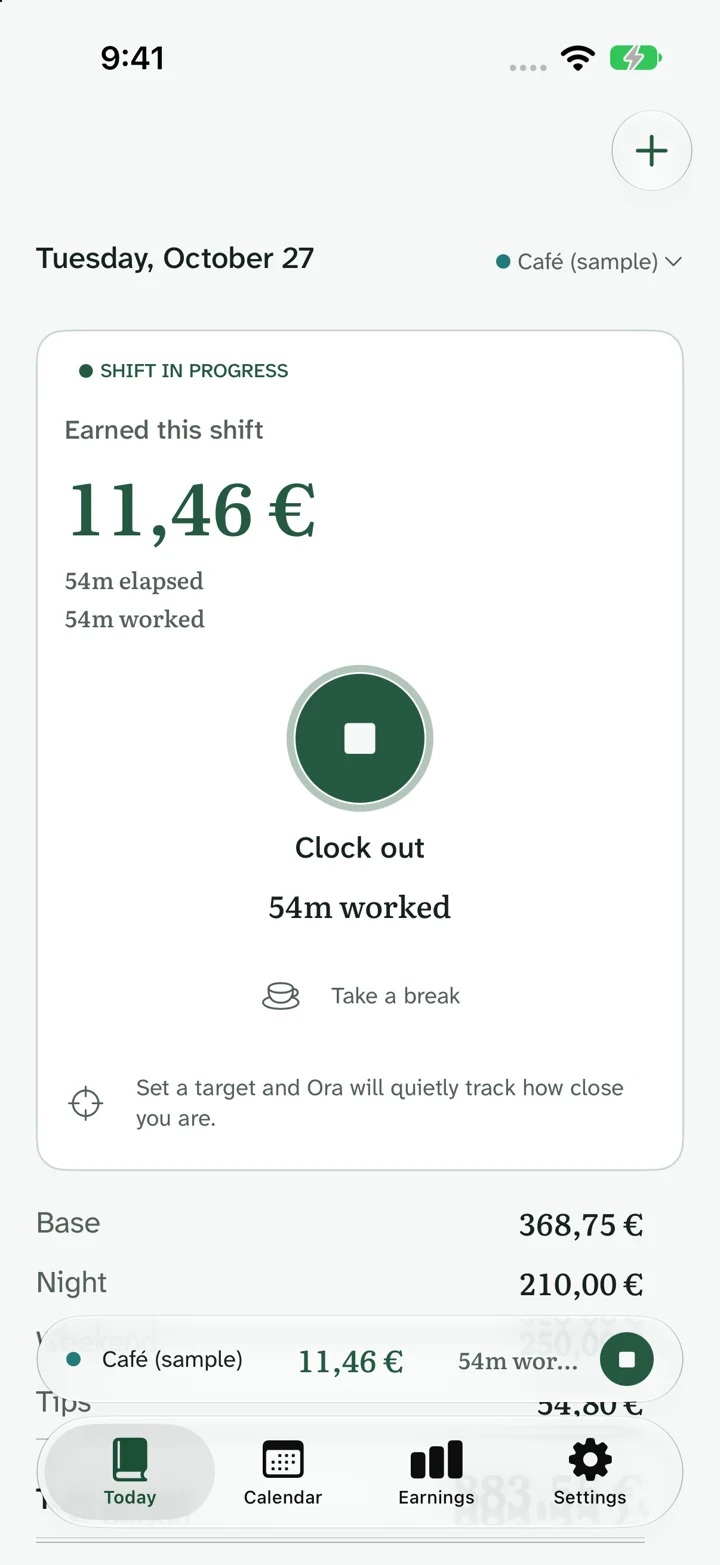
Use the relevant time zone and resolve ambiguous local times. A personal calendar of repeating starts helps organize the sequence, while actual worked time remains a separate record. Ora shows that record and estimates using synthetic data, not a security scheduling system.
Common questions
Is every 20:00–08:00 shift 12 elapsed hours?
On an ordinary night in one time zone it is. A seasonal clock change during the interval can change the real elapsed duration.
Does the example establish a legal shift length?
No. It illustrates dated arithmetic. Legal limits, rest requirements and break treatment need the rules applicable to the work.
Can night and overtime premiums be combined?
Only under the applicable combination rule. Do not automatically add or multiply every premium.
Results are estimates before tax. Rules and actual pay vary with your contract, location, payroll and deductions. About these estimates.