Ora
How it works
The tool compares each actual elapsed minute with your recurring night window in the selected time zone. It removes unpaid breaks from the portions they occupy, then adds the night premium to base pay. An inclusive multiplier of 1.5 adds only 0.5 times the base rate; an additive premium is an extra amount per night hour.

Worked example
A shift from 20:00 to 04:00, with a chosen night window of 22:00 to 06:00, contains six night hours and two other hours when no clock change or break occurs. At €15 per hour with an additional €3 per night hour, base pay is €120 and the premium is €18: €138 estimated gross.
The night-shift pay guide follows the overlap between a shift and a chosen night window. For an agreed hourly addition or multiplier without that window calculation, use the shift-differential tool and verify which hours qualify.
What to keep in mind
The night window and premium are examples, not universal rules. Check your agreement and payroll policy. Overtime, weekend or other premiums are not added or stacked. Each component is rounded separately to the smallest currency unit. Repeated and nonexistent input times at clock changes are rejected rather than guessed.
Common questions
When does night shift start?
There is no single window this tool can assume. Enter the start and end in the agreement or policy that applies to you.
Does every worker receive extra night pay?
Eligibility and the amount depend on the relevant rules and agreement. This calculator uses the premium you choose and does not determine whether it is owed.
What if my shift crosses midnight?
Enter the actual date for each endpoint. A window such as 22:00–06:00 is repeated across midnight, and the selected time zone is used for clock changes.
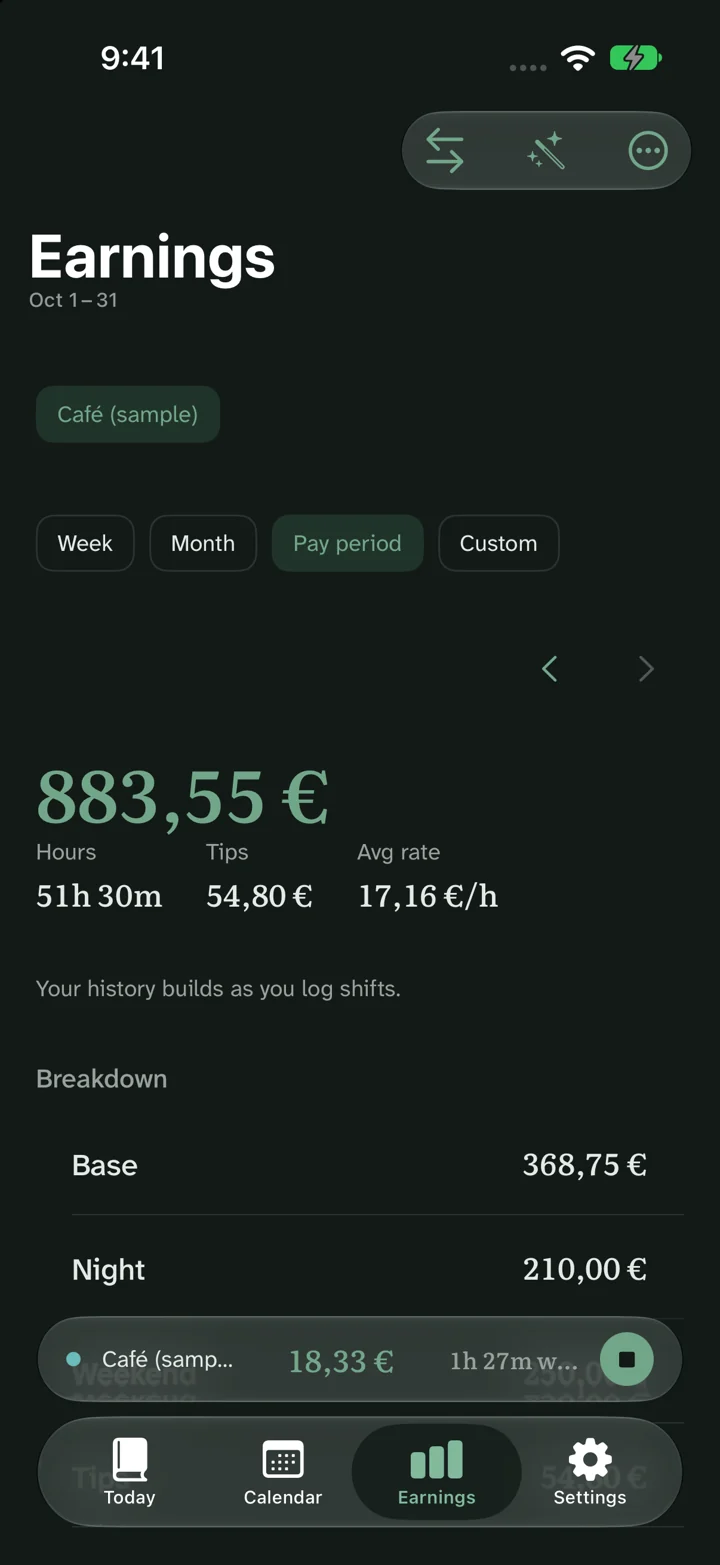
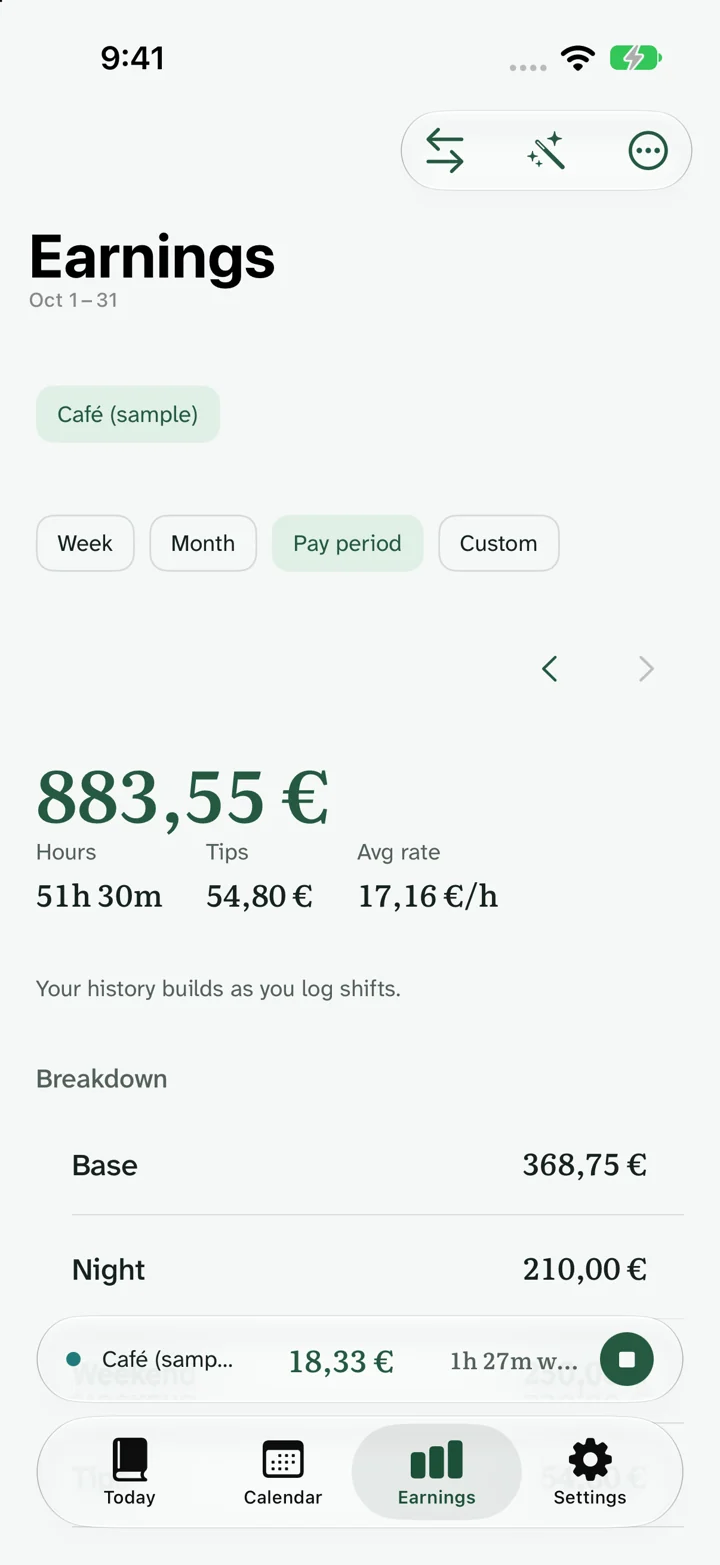
Want a record of your shifts? Explore shift tracking in Ora.
Results are estimates before tax. Rules and actual pay vary with your contract, location, payroll and deductions. About these estimates.