Ora
Gross pay vs net pay
Gross pay is earnings before deductions. Net pay is what remains after the applicable deductions and adjustments. An hours-times-rate calculator estimates gross earnings, not the exact amount reaching a bank account.
On this page
Build the gross estimate
For an hourly example, begin with paid hours × base rate. Add eligible overtime, premiums or bonuses according to their actual rules, keeping each component visible. A premium may already include base pay, so do not count it twice.
A 09:00–17:00 shift with a 30-minute unpaid break has 7.5 paid hours on an ordinary day. At €15 per hour, 7.5 × €15 = €112.50 gross. There is not enough information in those inputs to produce an exact net figure.
Why net pay varies
Deductions can include taxes, social contributions, pension or benefit contributions and other items under the applicable arrangements. Which items apply, how they are calculated and when adjustments occur depend on the individual situation and location.
A fixed “take 20% off” shortcut can mislead. Two people with the same gross earnings can have different deductions, and the same person’s deduction pattern can change across pay periods.

Read payment adjustments
Keep reimbursements and other adjustments distinct. A €20 expense repayment alongside €112.50 gross earnings does not necessarily mean €132.50 taxable wages, and it does not tell you net pay. The relevant payroll rules determine its treatment.
Check the slip’s gross, deduction, net and payment lines. A bank deposit can reflect more than wages for the shifts you are currently reviewing, such as an earlier correction.
Compare the right totals
On a narrow screen, scroll the table horizontally to see all columns.
| Stage | Check |
|---|---|
| Gross estimate | Dates, paid time, rates and eligible extras |
| Gross on the payslip | Same period and treatment of adjustments |
| Net on the payslip | Each applicable deduction and adjustment |
| Bank payment | Payment date, currency and separate items |
For a country-specific net estimate, use a maintained official resource or qualified advice with the information it requires. Ora’s generic tools do not determine taxes or legal entitlements.
Keep the explanation
If a result differs, save the assumptions rather than only the final number: paid minutes, rate, selected multiplier and period. This makes it possible to explain whether the difference concerns hours, gross earnings or deductions.
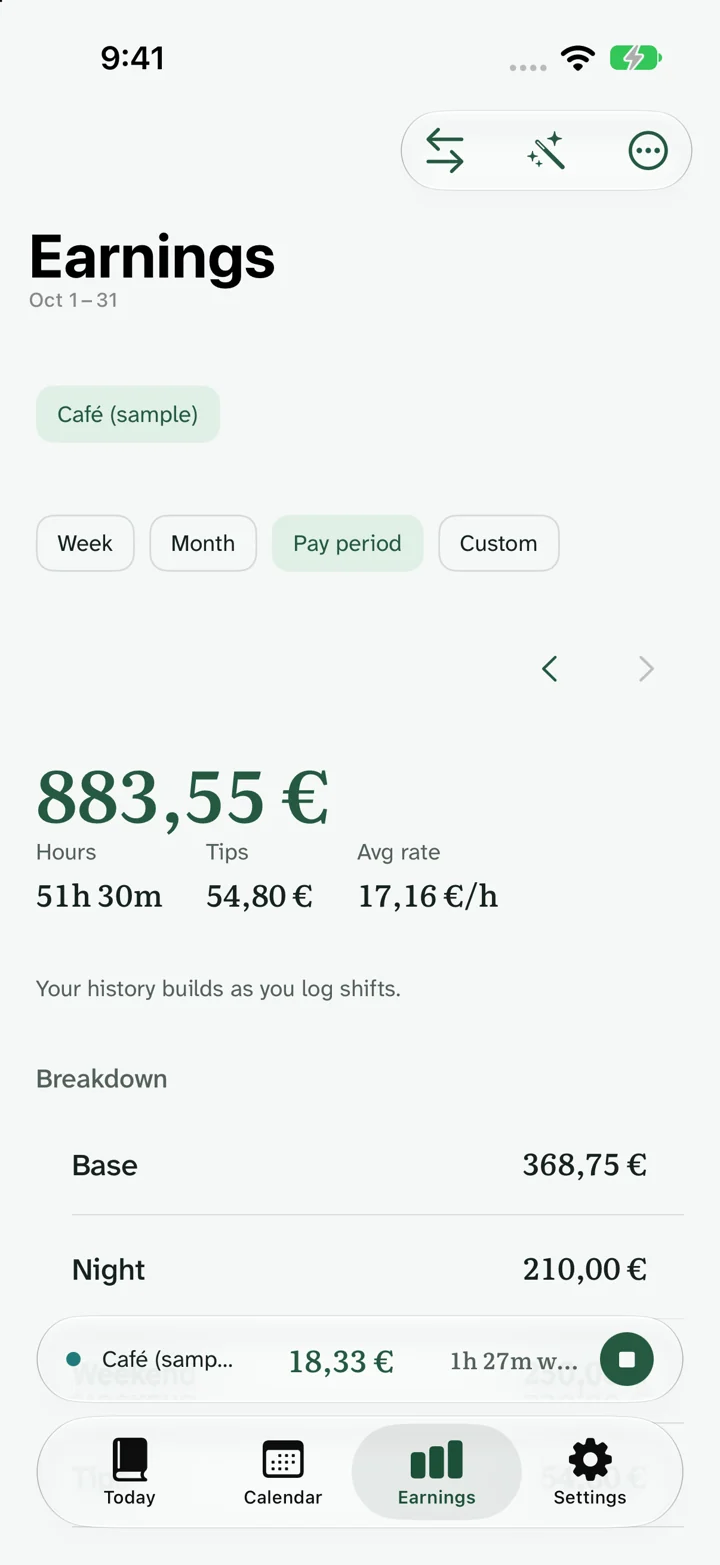
The payslip guide shows a clearly fictional breakdown so these stages can be compared without pretending to calculate anyone’s actual deductions.
Common questions
Can I work out net pay from an hourly rate alone?
No. You also need the applicable deductions, adjustments and personal circumstances, together with current local rules.
Are tips and reimbursements the same as basic wages?
They should be identified separately. Their payroll and tax treatment depends on the relevant rules; this guide does not assign one universal treatment.
Does a gross estimate include overtime?
Only when the chosen tool and inputs include it. Check the method and breakdown rather than assuming that every earnings calculator applies premiums.
Results are estimates before tax. Rules and actual pay vary with your contract, location, payroll and deductions. About these estimates.