Ora
Follow changing retail hours
Opening, closing and weekend shifts can have different lengths. Record each actual interval and its break treatment, then total paid minutes before converting the week into decimal hours.
Total the actual week
Do not estimate a changing rota by multiplying one “usual shift” by the number of days. A short opening shift and a longer Saturday shift need their own entries. Keep the dates with the times so additions and swaps remain visible.
On a narrow screen, scroll the table horizontally to see all columns.
| Day | Actual time | Unpaid break | Paid time |
|---|---|---|---|
| Monday | 09:00–14:00 | 0 min | 5h 00m |
| Wednesday | 12:00–18:30 | 30 min | 6h 00m |
| Friday | 16:00–21:15 | 15 min | 5h 00m |
| Saturday | 10:00–18:00 | 30 min | 7h 30m |
Paid time is 5 + 6 + 5 + 7.5 = 23h 30m, or 23.50 hours. At a hypothetical €15 hourly rate with no premiums, that gives €352.50 gross. No weekend entitlement is assumed.
Check how breaks are marked
The same eight-hour Saturday interval would remain eight paid hours if its 30-minute break were paid. Do not subtract all rest time simply because it appears in a schedule. Confirm the actual classification and record each unpaid interval once.
Use a short note for a changed or interrupted break rather than quietly altering a submitted total. Local rules and the employment agreement decide treatment; the calculator applies only the inputs provided.
Match the timesheet units
The example’s 7h 30m Saturday is 7.50 decimal hours, not 7.30. A timesheet displaying 7.5 may agree with a clock record showing 7:30. Check the unit before assuming a difference.
Convert hours and minutes when a form requests decimals. Keep exact minutes while adding the shifts, and apply the relevant rounding method only at the appropriate stage.
Review swaps and cut-offs
If a Friday close moves to Thursday, update the actual date while keeping a note of the approved swap. Confirm the payroll period instead of assuming every calendar week appears on one payslip.
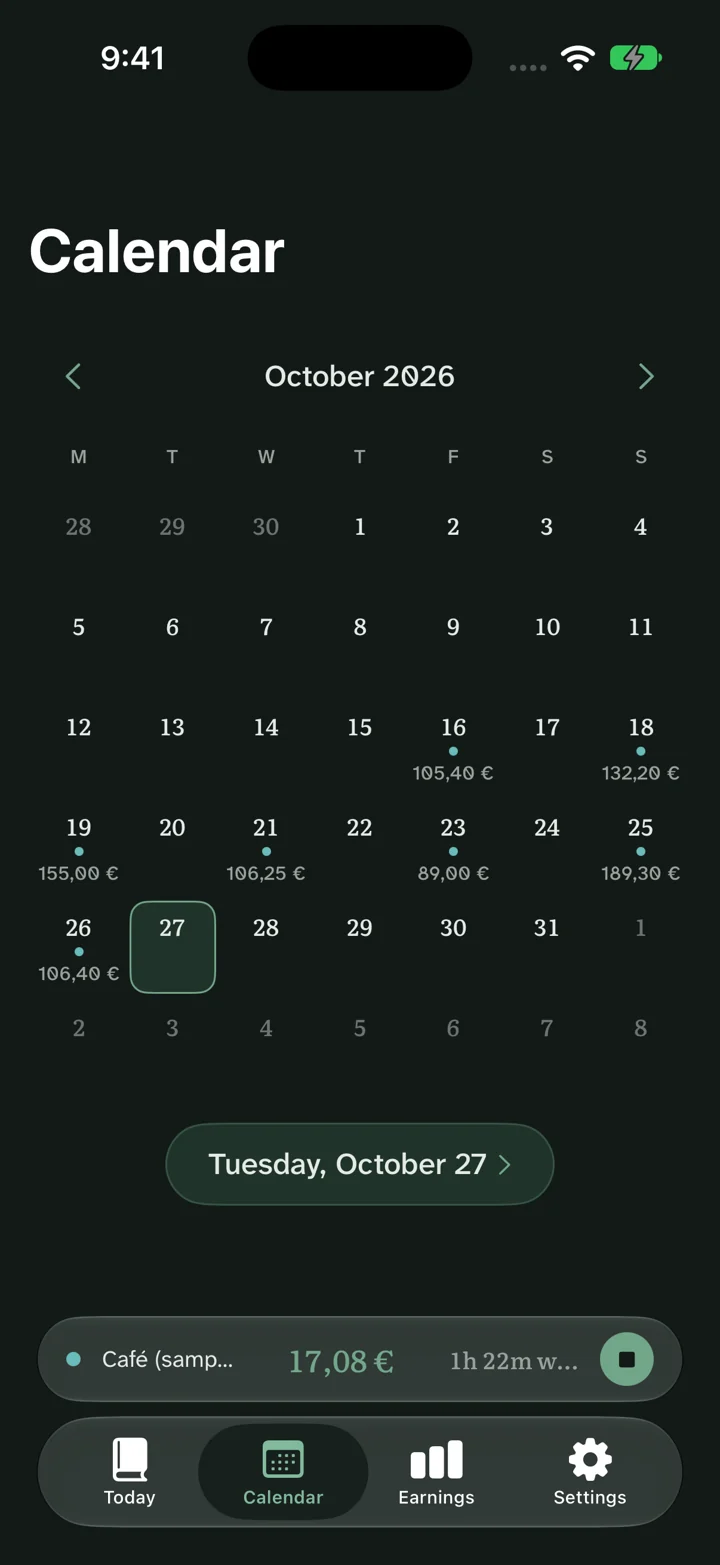
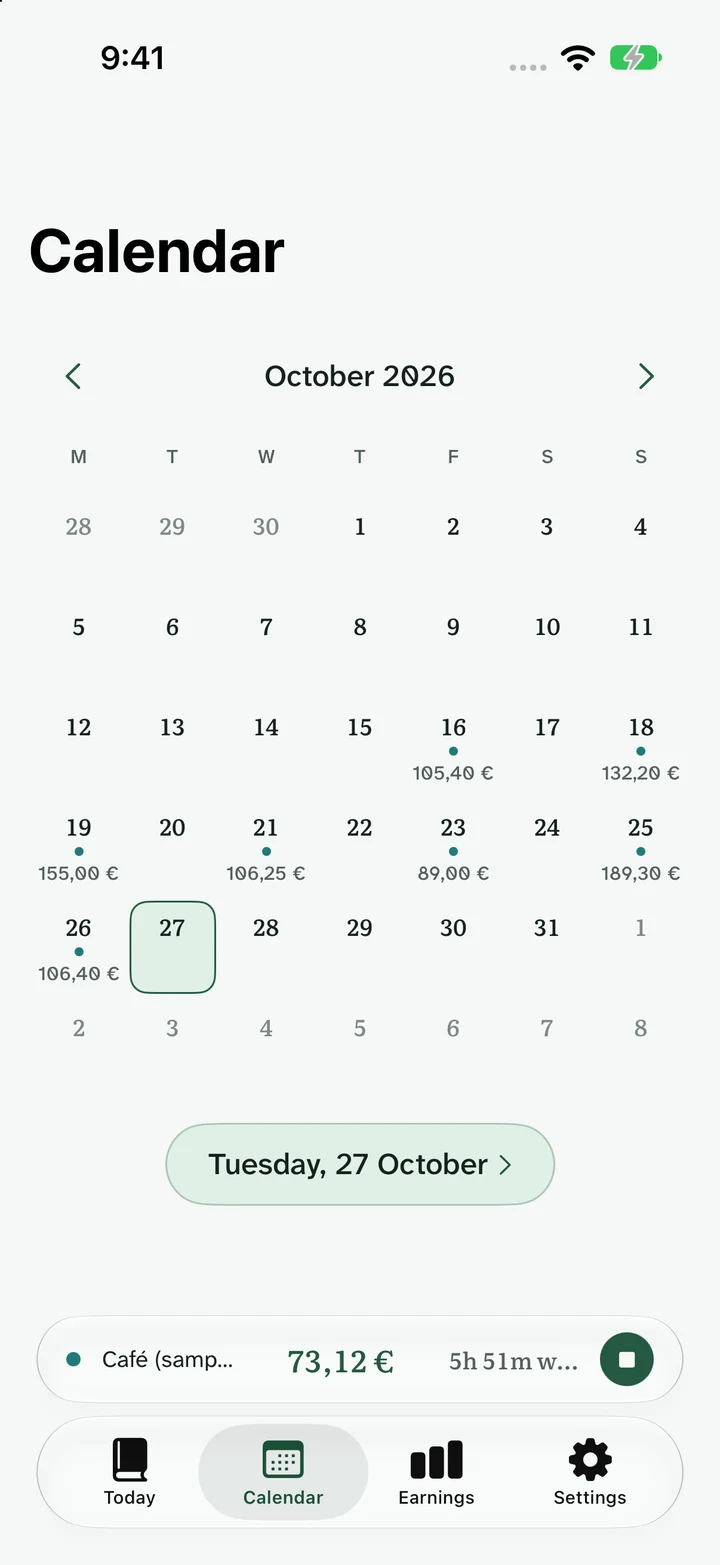
Ora brings shift records and estimated earnings together. The calendar screenshot uses sample shifts; it does not represent a retailer’s roster or endorsement. A personal record supports a comparison, but it cannot guarantee that every payroll line is correct.
Common questions
Is a weekend shift automatically paid extra?
No premium is assumed. Check the employment arrangement and applicable local rules before choosing a weekend rate.
Why does 7:30 become 7.50?
Thirty minutes is half an hour. Divide minutes by 60, rather than treating them as hundredths.
Should I replace a planned shift after a swap?
Keep the planned rota or change note, and record the actual worked date separately. This helps explain which hours belong to a period.
Results are estimates before tax. Rules and actual pay vary with your contract, location, payroll and deductions. About these estimates.