Ora
Keep late shifts clear
A close that runs past midnight needs its actual finish date, a clear break record and any earnings extras kept separately. That makes a changing hospitality week easier to total and explain.
Record the actual close
A restaurant finish can depend on the final table, clean-down or a changed assignment. A hotel shift can continue through a handover. Keep the planned finish and the actual finish as separate facts instead of replacing one without a note.
For a fictional shift from 17:30 to 01:00 the next day, elapsed time is 7h 30m on an ordinary night. A 30-minute unpaid break from 21:00 to 21:30 leaves seven paid hours. At a chosen €15 base rate, that is €105 gross before any other items.
Calculate a late shift’s gross estimate. This arithmetic does not decide which closing activities or breaks must be paid under an agreement.
Keep extras distinct
Do not use tips to hide an uncertain hours total. Keep basic wages, confirmed tips or bonuses, and expense repayments as separate items in a personal estimate. Their payroll and tax treatment can differ by location and arrangement.
This page makes no claim about tip-pool allocation, minimum-wage treatment or automatic tax calculation. Confirm the relevant records and rules before comparing a payslip. A generic gross estimate cannot establish take-home pay.
Keep a changing week usable
Use a short note such as “finish extended to 01:00” alongside the dated shift. At the end of the week, check missing finishes, duplicate entries, break changes and payroll cut-offs. Do not store customer names or payment details in an hours record.
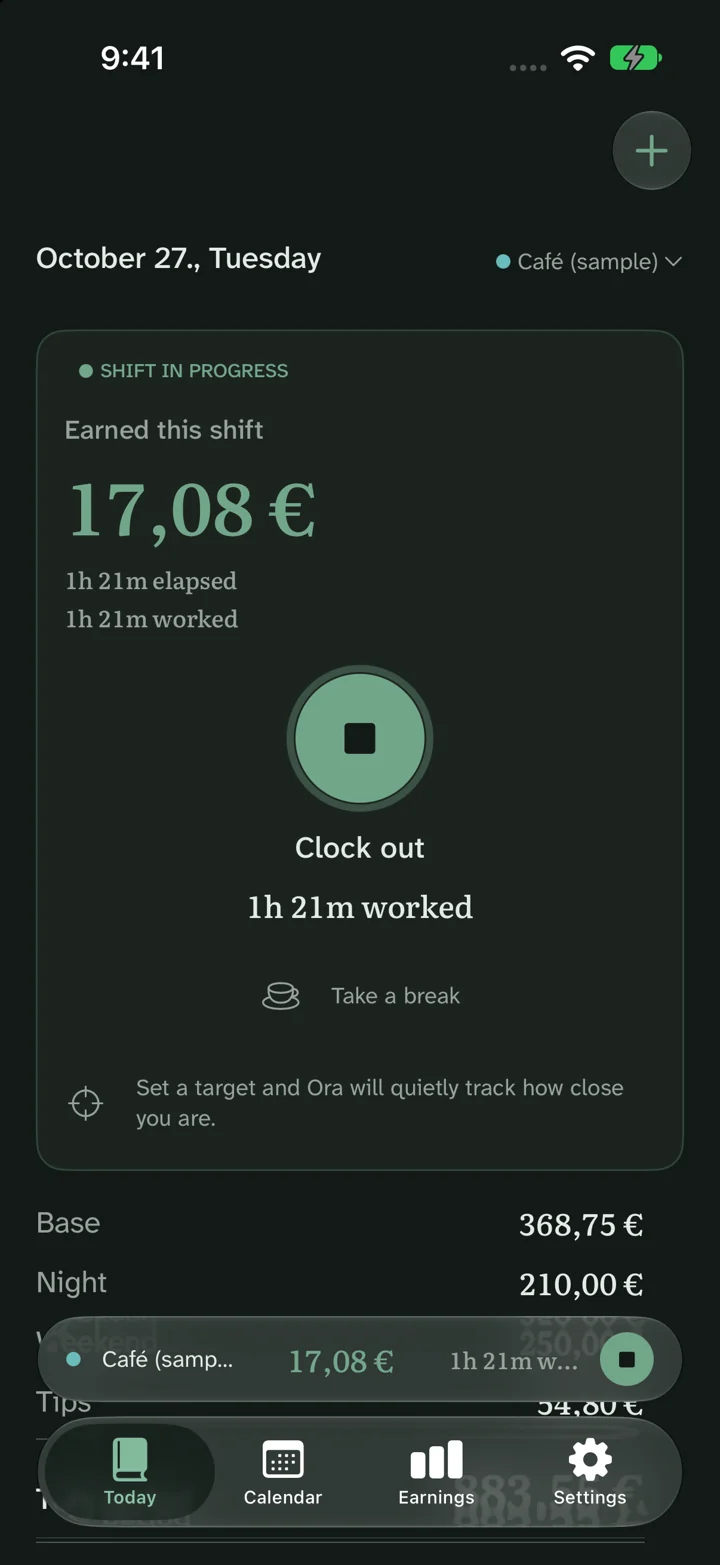
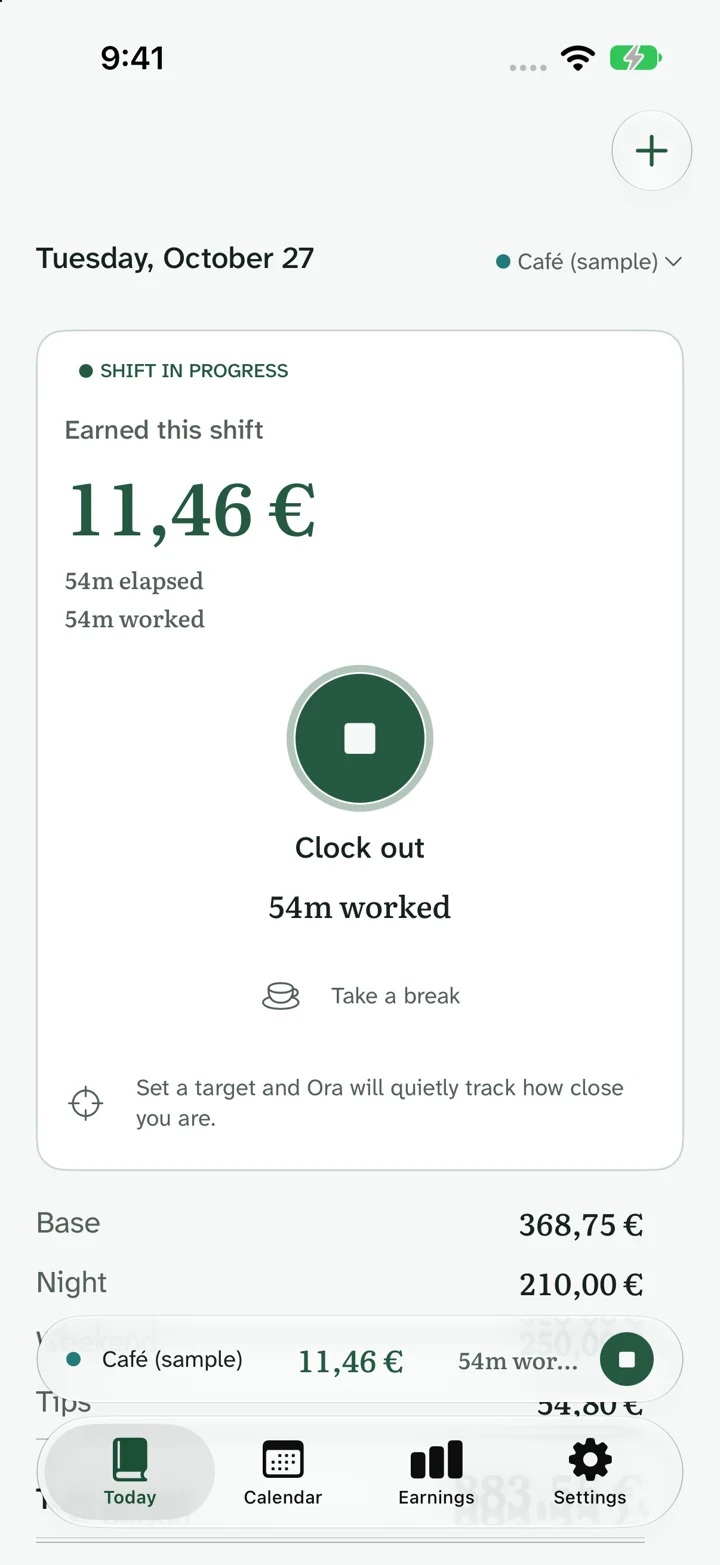
Ora demonstrates a shift record and estimated earnings with sample data. For a quick check without installing an app, total your actual dates in the free tools, then keep the assumptions with any question you raise to payroll.
Common questions
Can a shift finish on the next day?
Yes. Give the finish its actual next-day date. A local clock change can alter elapsed time, so the date and time zone matter.
Does this calculate tip-pool rules?
No. The examples keep extras separate and do not apply jurisdiction-specific tip-pool, wage or tax rules.
What if closing time changes?
Record the actual finish and note the change. Check which version was submitted for the relevant payroll period.
Results are estimates before tax. Rules and actual pay vary with your contract, location, payroll and deductions. About these estimates.